

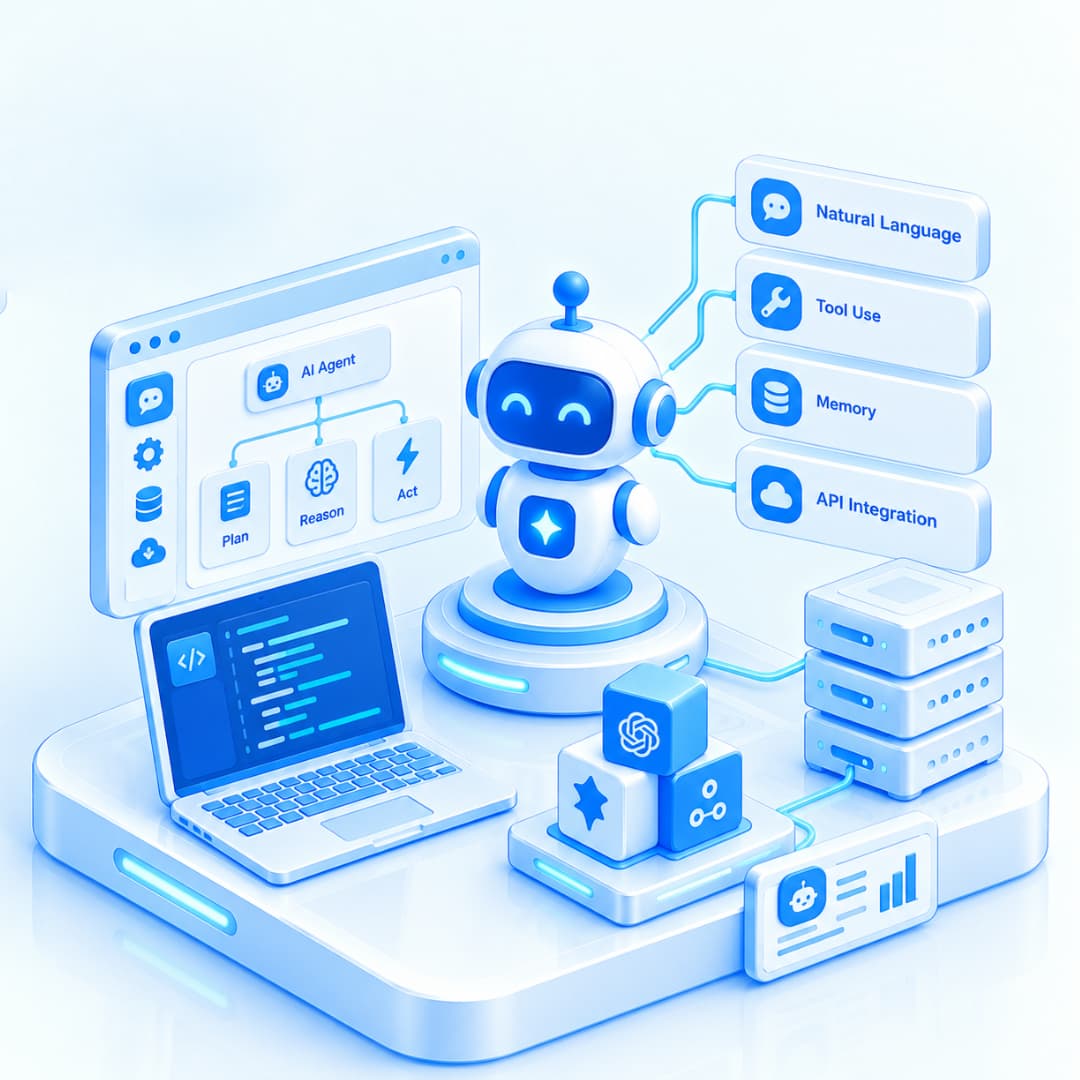







An intake assistant that clears the overnight queue by 8am
Patient enquiries arrived around the clock but were only triaged once staff logged in.
- 63% auto-resolved
- 0 missed urgent cases
Custom AI automations, modern web applications and intelligent systems that work 24/7 — so you can focus on what really matters.
Let's Build Your AutomationMost teams don't have a technology problem. They have the same handful of jobs eating time every week.
Copying data between tools, chasing updates, and re-keying the same information by hand — hours that never make it back.
Enquiries sit unanswered overnight, follow-ups get forgotten, and good leads go cold before anyone picks them up.
Outcomes depend on who happened to handle the task. Nothing is written down, so quality swings and onboarding drags.
Copying data between tools, chasing updates, and re-keying the same information by hand — hours that never make it back.
Enquiries sit unanswered overnight, follow-ups get forgotten, and good leads go cold before anyone picks them up.
Outcomes depend on who happened to handle the task. Nothing is written down, so quality swings and onboarding drags.
Copying data between tools, chasing updates, and re-keying the same information by hand — hours that never make it back.
Enquiries sit unanswered overnight, follow-ups get forgotten, and good leads go cold before anyone picks them up.
Outcomes depend on who happened to handle the task. Nothing is written down, so quality swings and onboarding drags.
Copying data between tools, chasing updates, and re-keying the same information by hand — hours that never make it back.
Enquiries sit unanswered overnight, follow-ups get forgotten, and good leads go cold before anyone picks them up.
Outcomes depend on who happened to handle the task. Nothing is written down, so quality swings and onboarding drags.
AI automation, agents, and lead generation are where we spend most of our time. The rest supports building and shipping the systems around them. Scroll to browse all of it.
We sit with the people doing the work, follow the process as it really runs, and agree on what a good outcome looks like.
We shape the smallest solution that solves it — the workflow, the data, the checks, and where a person stays in the loop.
We build it in short iterations you can see, connect it to the tools you already use, and roll it out without a big-bang switch.
Once it is live we watch how it behaves, tune the rough edges, and extend it as the next bottleneck becomes clear.
A cross-section across logistics, healthcare, recruitment, finance and more — each one aimed at a specific bottleneck.
A regional courier planned every route by hand each morning, delaying the first pickups.
Patient enquiries arrived around the clock but were only triaged once staff logged in.
A staffing firm's consultants spent mornings researching prospects instead of speaking to them.
Every return needed three back-and-forth emails before a label was issued.
Reconciliation pulled numbers from five systems into a fragile spreadsheet.
An operator ran their whole service business on paper job sheets and phone calls.
Quick calculators and audits that show where the time goes and what automating it is worth. Scroll to move through them.
Enter a task's frequency and handling time to see the hours and cost you would recover in a year.
Answer a short set of questions about your week and get a ranked list of what to automate first.
Check how fast and consistently new enquiries are handled, and where deals are leaking.
Almost never. Most of what we build connects to your existing systems and fills the gaps between them. If a tool is genuinely holding you back we'll say so, but the default is to work with what you have.
You'll see a working slice within the first few weeks. We build in short iterations you can review, so progress is visible the whole way rather than landing in one large delivery at the end.
Every system we build has checks and a defined point where a person stays in the loop for anything unusual or high-stakes. When it's live we monitor how it behaves and tune it, so edge cases get handled rather than ignored.
No. Small teams often feel the benefit fastest because the manual work is concentrated in a few people. We scope the first project to something that pays for itself quickly.
We'll tell you whether it's worth automating, and what it would take.
Start a project